
Manifested vs. Unmanifested Pallets: What Is the Difference?
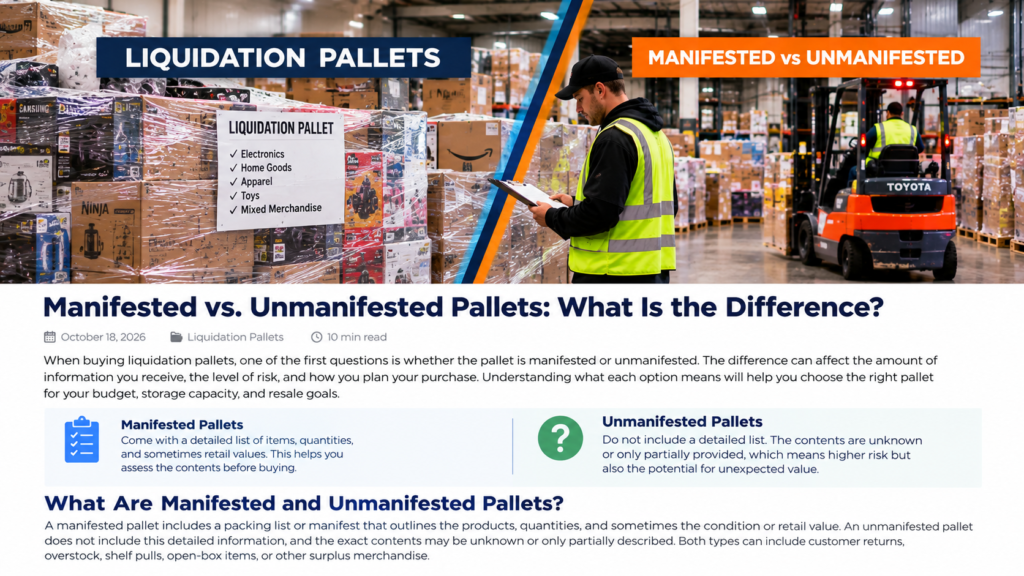
When buying wholesale inventory, understanding manifested liquidation pallets can help you make more informed purchasing decisions. A manifested pallet comes with an inventory list that describes some or all of the expected contents. An unmanifested pallet does not provide the same detailed product-by-product information, which can make it harder to estimate its resale potential before purchasing.
Both options may suit different types of buyers. The right choice depends on your budget, experience, risk tolerance, storage capacity, and ability to process and sell the merchandise.
Pallet Liquidation USA helps resellers, small businesses, and wholesale buyers explore inventory opportunities. In this guide, we’ll explain how manifested and unmanifested pallets differ, what to look for in a manifest, and how to evaluate the risks and costs before ordering.
What Are Manifested Liquidation Pallets?
Manifested liquidation pallets are bulk merchandise lots accompanied by an inventory document commonly called a manifest. Depending on the supplier, the manifest may include product descriptions, quantities, model numbers, stock identifiers, condition information, or estimated retail values.
This information gives buyers a clearer picture of the expected contents before committing to a purchase. It can help you identify products you understand, research comparable selling prices, and estimate whether a lot fits your business.
However, a manifest is not automatically a guarantee that every listed item will arrive in the stated condition or that the estimated retail value represents achievable resale revenue. Always read the supplier’s terms and understand what the manifest does and does not promise.
What Information Can a Manifest Include?
A manifest may contain:
- Product names or descriptions
- Quantities and item identifiers
- Model numbers or SKUs
- Product categories
- Stated merchandise conditions
- Estimated retail values, where supplied
The amount of information varies. Some manifests provide detailed product-level information, while others contain only a broad inventory summary.
Review the document alongside the actual product listing. If important details are missing, ask the supplier for clarification before purchasing.
What Are Unmanifested Liquidation Pallets?
Unmanifested pallets are merchandise lots without a complete, detailed inventory list. The supplier may provide general category information or photographs, but the exact products and quantities may be uncertain.
Depending on the lot, the contents could include overstock, customer returns, shelf pulls, open-box merchandise, or other surplus goods. Product categories and conditions can vary considerably.
The main difference is the amount of information available before buying. With less detail, you may find it more difficult to estimate resale value, identify potential defects, or determine how much work the inventory will require.
An unmanifested pallet is not necessarily a bad purchase. It simply requires you to recognise the uncertainty and decide whether the potential opportunity justifies the risk.
Manifested vs. Unmanifested Pallets: Key Differences
Inventory Visibility
Manifested pallets provide a list of expected products, although the level of detail varies. Unmanifested pallets provide less product-specific information, so buyers may have to rely more heavily on the general description and available photographs.
Resale Planning
A useful manifest can help you research comparable products and estimate possible selling prices. Without one, your calculations may require broader assumptions and a larger allowance for uncertainty.
Neither option guarantees profit. Actual results depend on product condition, demand, selling costs, and the accuracy of the information provided.
Purchasing Risk
Manifested inventory can reduce uncertainty about the expected product mix, but it does not remove all risk. Unmanifested inventory carries greater uncertainty about the exact contents, making careful budgeting particularly important.
Suitability for Different Buyers
New resellers may prefer detailed inventory information because it gives them more opportunities to research products before buying. Experienced buyers may be comfortable evaluating less-detailed lots, provided they understand the risks and have a suitable sales strategy.
The best choice depends on your experience and purchasing goals rather than a universal rule.
Advantages of Buying Manifested Liquidation Pallets
Better Product Research
When a manifest includes product names or model numbers, you can research comparable items before buying. This helps you understand the likely customer market and determine whether you have the knowledge to sell the products.
More Structured Cost Estimates
A detailed inventory list can help you estimate potential revenue and identify expenses associated with particular products. You can compare the expected value of the sellable inventory with the pallet price, freight, and preparation costs.
These estimates should remain conservative. An item’s original retail value is not the same as the amount you will receive when reselling it.
Easier Inventory Planning
A manifest can help you anticipate the categories you will receive and plan storage, sorting, photography, and product listings. This may be especially useful for businesses with limited storage or a specific customer base.
Advantages and Risks of Unmanifested Pallets
Unmanifested pallets may appeal to buyers who are comfortable with uncertainty and can handle assorted inventory. A mixed lot may provide opportunities to discover products across different categories.
However, there are important considerations.
You may not know the exact quantities, brands, sizes, or conditions of individual products. This can make it harder to forecast revenue and may increase the time required to inspect and sort the merchandise.
If you choose an unmanifested lot, avoid spending money you cannot afford to tie up in uncertain inventory. Base your decision on the available product information, stated terms, and a realistic assessment of what could go wrong.
How to Evaluate Manifested Liquidation Pallets Before Buying
Before purchasing manifested liquidation pallets, follow a consistent evaluation process.
1. Read the Entire Manifest
Review the products, quantities, and other details provided. Identify the items you understand and can research. Check for duplicate products, unusual quantities, and items that may require specialist knowledge or testing.
2. Verify the Condition Information
Determine whether products are described as new, overstock, shelf pulls, customer returns, open-box, used, damaged, or untested. Condition labels can have a major impact on resale value.
If the manifest does not explain condition clearly, ask the supplier for clarification.
3. Research Realistic Resale Prices
Compare similar products on the platforms where you intend to sell. Account for condition, competition, demand, marketplace fees, and shipping expenses.
Do not calculate profit by assuming every item will sell at its original retail price.
4. Calculate the Total Landed Cost
Include the purchase price, freight, unloading, storage, sorting, testing, repairs, packaging, and selling fees. If some products cannot be resold, the effective cost of the remaining sellable items will increase.
5. Review the Supplier’s Terms
Check what the supplier says about the manifest, inventory accuracy, product condition, shipping, and any applicable return or dispute policies. Save the listing and order details for your records.
How to Choose the Right Pallet for Your Resale Business
Start with your own business requirements rather than choosing solely by the advertised discount.
If you sell electronics, you may need product identifiers, testing information, and details about included accessories. If you sell clothing, sizes, styles, and garment conditions may be more important. General merchandise buyers may need enough information to estimate sorting time and storage requirements.
Think about your budget, customer base, available space, and selling channels. A smaller lot with suitable products may be more useful than a larger pallet containing merchandise that is difficult to sell.
If you are still learning the liquidation process, consider beginning with a manageable order. Track the results so you can use real sales data to guide future purchasing decisions.
Where to Find Liquidation Pallets for Resale
If you are researching wholesale inventory, review the available listings at Pallet Liquidation USA. You can browse the wholesale shop and compare the descriptions and terms of individual products.
For mixed inventory, consider reviewing the Amazon general merchandise pallet listing. If you are comparing larger quantities, explore the truckload liquidation category.
You can also examine the electronics pallet category if you understand electronic products and their resale requirements, or review the Target general merchandise truckload listing for another inventory example.
These are examples of available website categories and listings, not a guarantee that any particular lot is manifested. Check each product page to confirm whether a manifest is provided, what it contains, and whether the listing is currently available.
For questions about inventory or purchasing arrangements, visit the Pallet Liquidation USA contact page.
Common Mistakes to Avoid
When comparing manifested and unmanifested pallets, avoid these mistakes:
- Assuming a manifest guarantees product condition or profit.
- Treating estimated retail value as guaranteed resale revenue.
- Ignoring freight and handling costs.
- Failing to research product demand.
- Overlooking missing accessories or incomplete products.
- Buying more inventory than you can store or process.
- Skipping the supplier’s terms and condition disclosures.
For broader online purchasing guidance, the Federal Trade Commission’s online shopping guide explains why buyers should research sellers, review product information, and understand transaction terms.
The U.S. Small Business Administration’s break-even guide can also help you understand how costs and revenue affect the sales needed to cover your expenses.
Conclusion: Which Type of Liquidation Pallet Should You Choose?
Manifested liquidation pallets provide more information about the expected inventory, which can help you research products and estimate costs before buying. Unmanifested pallets offer less visibility and require buyers to be comfortable with greater uncertainty.
Neither option guarantees a better result. The right choice depends on your experience, budget, product knowledge, and ability to manage the merchandise.
Review the available information, verify product conditions where possible, research realistic resale prices, and calculate your total costs before purchasing. Explore Pallet Liquidation USA’s available listings and compare the specific terms of each lot. A careful evaluation process can help you choose inventory that better fits your resale business.
