
Liquidation Pallets vs. Truckloads: Which Is Right for Your Business?
When sourcing wholesale inventory, resellers often need to decide between buying individual pallets and purchasing larger truckloads. Both options can provide access to discounted merchandise, but the right choice depends on your budget, storage capacity, experience, and sales strategy. Understanding the differences can help you choose inventory that fits your business rather than tying up money in stock you cannot process or sell quickly.
If you are searching for liquidation truckloads for sale, it is important to compare more than the advertised price. Inventory volume, product condition, freight charges, handling requirements, and resale demand all affect the overall value of a purchase.
Pallet Liquidation USA helps resellers, small businesses, and wholesale buyers explore inventory options. This guide compares liquidation pallets with truckloads and explains how to choose the approach that makes sense for your business.
What Are Liquidation Pallets and Truckloads?
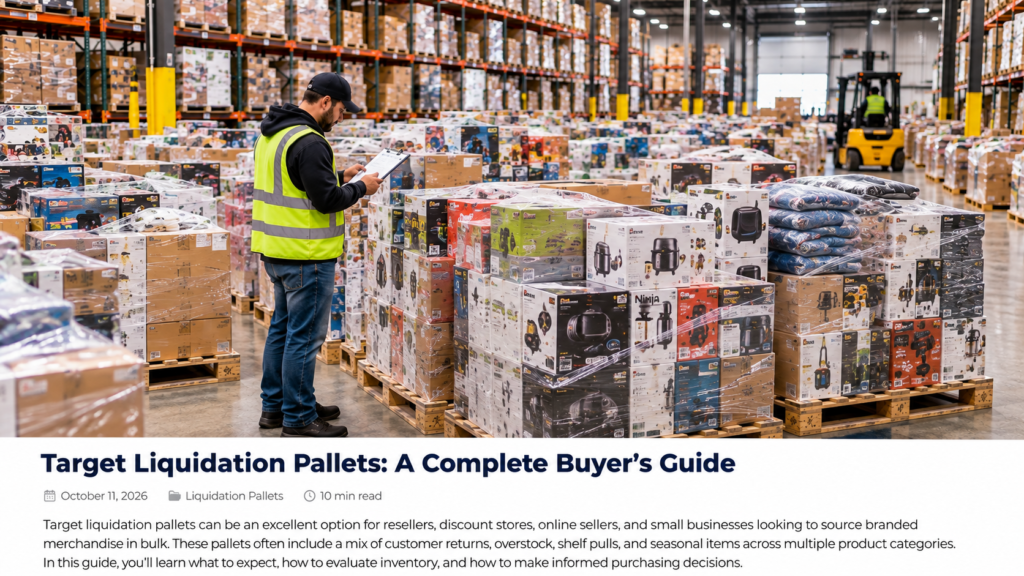
Liquidation pallets are bulk lots of merchandise assembled on pallets. Depending on the specific listing, they may contain customer returns, overstock, shelf pulls, open-box products, or other surplus inventory.
A truckload generally refers to a substantially larger quantity of merchandise transported together, often using a freight trailer. The exact number of pallets, product categories, and shipment size depend on the load.
Neither format guarantees that every item is new, functional, or easy to resell. Always review the product description, condition information, manifest when available, and supplier terms before purchasing.
Liquidation Pallets: Advantages and Considerations
A More Manageable Starting Purchase
For many new resellers, a smaller pallet purchase can be easier to manage than a full truckload. It may require less initial capital and less storage space, although the actual cost varies by inventory and shipping distance.
A smaller purchase can also help you learn how to inspect products, organise stock, create listings, and handle customer orders before expanding your operation.
Flexibility Across Product Categories
Individual pallets may offer access to specific categories or mixed merchandise. You can choose inventory that matches your customers and your experience rather than committing immediately to a large shipment.
For example, buyers interested in electronics can review the electronics pallet category. Buyers researching mixed inventory can also review the Amazon general merchandise pallet listing, checking its current details before ordering.
Limitations of Pallet Purchases
Pallets can still carry risks. A low-priced lot may include damaged, incomplete, or untested items. Freight costs can also make a small order less economical, particularly if transportation charges are high relative to the purchase price.
Compare the total cost of the pallet, not just its advertised price.
Liquidation Truckloads for Sale: Advantages and Considerations
More Inventory in One Shipment
Truckloads can suit established resellers and businesses with enough capital, staff, storage, and sales capacity to manage larger quantities. A larger order may provide a more substantial inventory supply, but it also increases the amount of money committed to stock.
Buyers searching for liquidation truckloads for sale should review the specific load details, including its contents, condition, quantity, freight arrangements, and any manifest supplied.
Potential Operational Efficiencies
For some businesses, consolidating a large inventory purchase into one shipment can simplify sourcing and inventory planning. However, the actual cost per unit depends on the merchandise, freight, handling, and other expenses.
A larger shipment is not automatically cheaper or more profitable. Compare realistic costs and resale demand before deciding.
Higher Storage and Cash-Flow Requirements
Truckloads may require more space for unloading, sorting, inspecting, and storing merchandise. If products sell slowly, a large purchase can tie up working capital and create additional storage costs.
Before ordering, estimate how quickly you can process the shipment and where you will store the goods. Make sure you have a realistic plan for moving the inventory through your sales channels.
Explore the truckload liquidation category to compare relevant listings and review their current terms.
How to Evaluate Liquidation Truckloads for Sale
When comparing liquidation truckloads for sale, review the merchandise category, product condition, manifest availability, and shipping arrangements. Buyers researching liquidation truckloads for sale should calculate the full cost, including freight, unloading, storage, and preparation. Compare different liquidation truckloads for sale listings against realistic resale prices and customer demand. Before purchasing liquidation truckloads for sale, confirm the supplier’s terms and ensure you have enough space and working capital to manage the inventory. Choosing suitable liquidation truckloads for sale can help you make a more informed wholesale purchasing decision.
Liquidation Pallets vs. Truckloads: Key Differences
The best format depends on your business circumstances rather than a universal rule.
Budget: Pallets may require a smaller initial commitment, while truckloads generally involve a larger purchase and freight arrangement.
Storage: A pallet may be easier to accommodate in a limited space. A truckload can require substantial room for unloading and sorting.
Inventory volume: Truckloads provide a larger quantity of merchandise, but the exact volume depends on the shipment.
Risk exposure: Both formats can include uncertain product conditions. A larger order may increase the financial impact if the inventory performs poorly.
Business experience: Smaller orders may be useful for learning the liquidation process. Larger loads are often more practical for buyers with established systems and customer demand.
Resale strategy: The right option depends on what you sell, where you sell it, and how quickly you can prepare and move inventory.
How to Calculate the True Cost Before Buying
Whether you choose pallets or truckloads, calculate the full cost before making a purchasing decision.
Include:
- Purchase price
- Freight and transportation
- Unloading and handling
- Storage and inventory processing
- Product testing or repairs
- Packaging and shipping to customers
- Marketplace and payment fees
- Returns, unsellable goods, and other unexpected costs
For example, imagine a pallet costs $700 and freight is $180. Your initial cost is $880 before processing and selling expenses.
Now consider a larger load with a lower estimated cost per item but significantly higher total freight and storage requirements. The larger purchase only makes sense if you can manage the inventory and have a realistic route to selling it.
Use conservative resale estimates. Original retail value is not guaranteed revenue, and a manifest does not necessarily guarantee that every listed item will be in sellable condition.
The U.S. Small Business Administration’s break-even guide can help you understand how costs and sales affect the point at which your business covers its expenses.
Which Option Is Better for Beginners?
For beginners, starting with a manageable pallet may be sensible if it fits the available budget and storage space. It allows you to learn the purchasing process and assess how long it takes to receive, inspect, list, and sell merchandise.
Start with a product category you understand. Research comparable products, learn the relevant marketplace rules, and track your expenses and sales.
Avoid buying a truckload simply because the price per item appears attractive. Without sufficient storage, working capital, and sales capacity, a large order can become difficult to manage.
As you gain experience, review your results. If you can consistently process inventory and sell products at realistic margins, you can evaluate larger orders based on your actual business performance.
When Should an Established Reseller Choose a Truckload?
An established reseller may consider a truckload when demand is strong, the business has enough working capital, and the operation can handle the additional volume.
Before purchasing, make sure you have:
- Suitable storage and unloading arrangements
- A plan for inspecting and sorting the shipment
- Enough staff or time to process inventory
- Sales channels capable of handling the volume
- A realistic estimate of freight and operating expenses
- A contingency plan for slow-moving or unsellable items
If these requirements are not in place, a smaller purchase may be more appropriate even for a growing business.
Buyers interested in specific inventory types can compare available options, such as the Milwaukee tool pallet listings or the Target general merchandise truckload listing. Confirm the exact contents and conditions on each listing rather than assuming every shipment has the same merchandise.
Common Mistakes to Avoid
Whether buying pallets or truckloads, avoid these mistakes:
- Focusing only on the advertised price: Calculate the full landed and operating cost.
- Overestimating resale value: Research comparable products and actual market demand.
- Ignoring product condition: Check whether items are new, returned, open-box, damaged, or untested.
- Underestimating storage: Make sure you have enough room for the shipment.
- Buying too much too soon: Match inventory volume to your cash flow and sales capacity.
- Skipping supplier terms: Review shipping, payment, condition disclosures, and applicable policies.
- Failing to track results: Record expenses and sales to improve future purchasing decisions.
The Federal Trade Commission’s online shopping guidance offers general advice on researching sellers, reviewing transaction terms, and understanding delivery and refund policies.
Where to Find Pallets and Truckloads for Your Business
If you are comparing wholesale inventory, start by reviewing available listings and choosing products that suit your budget and sales strategy.
Visit Pallet Liquidation USA to learn more about the business. You can browse the wholesale shop and review the store listings to see the inventory currently presented on the website.
You may also want to compare the home products tag when researching household merchandise. Product availability and listing details can change, so confirm pricing, quantity, condition, and shipping terms before placing an order.
For questions about available inventory or bulk purchasing, use the Pallet Liquidation USA contact page.
Conclusion: Should You Buy Liquidation Pallets or Truckloads?
Choosing between liquidation pallets and truckloads comes down to your available capital, storage capacity, experience, and ability to sell the merchandise. Pallets may offer a more manageable way to learn the process, while truckloads can suit businesses equipped to handle larger quantities.
Whichever format you choose, review the listing, verify product condition, calculate freight and operating costs, and research realistic resale demand. Avoid assuming that larger purchases guarantee better margins.
Explore the available inventory at Pallet Liquidation USA, compare relevant listings, and choose an order that fits your business plan. Careful purchasing and accurate cost tracking can help you build a more sustainable resale operation.
